
What Sandalwood Incense Smells Like and How to Use It
Sandalwood incense is known for a soft wood scent with a little sweetness. If you are choosing your first box, that is a useful starting point. It is not a promise that every stick will smell the same.
The recipe matters. So does the smoke from the burning stick. Here is how to read the scent description, try one stick and decide whether it suits your space.
What does sandalwood incense smell like?
Think of wood as the main note, with sweetness in the background. Nippon Kodo, an incense maker, describes sandalwood this way and notes that its scent varies by region. These are general scent words, not a test of any particular box.
Read Nippon Kodo's sandalwood guide
You may also see the word creamy. In scent writing, this means smooth or rounded. It does not mean milk or cream is an ingredient. Retailer Suwada uses this word to explain sandalwood's texture as a smell.
To make the description useful, ask yourself three questions:
- Do I want wood to be the main scent?
- Do I like a hint of sweetness?
- Am I comfortable with the smell of burning incense as well as fragrance?
You do not need to find every note on the label. Your own response is the point.
Sandalwood across traditions
Sandalwood has a long history in different forms. Its fragrance comes from the heartwood, not the leaves or bark. In one Hindu puja described by the Smithsonian, sandalwood paste is used to wash a sacred image. That is a different practice from lighting an incense stick.
In Japan, sandalwood was among the materials used in blended incense. The Met describes incense in Buddhist practice by the sixth century, later blends that scented homes and clothing, and the appreciation of fragrant woods. Sticks became popular much later.
These traditions give the scent context. They do not tell us the recipe, origin or ceremonial role of a modern box of sticks.
See Nippon Kodo's material guide
Why two sandalwood sticks can smell different
The name alone does not tell you the full recipe. Check what the maker says about ingredients and added notes. A scent description also does not establish the percentage of sandalwood, its species or its source.
Before buying, look for three separate pieces of information: the scent, the ingredients and the stick format. If a detail matters to you and the listing does not answer it, ask the seller.
Do not use a pleasant smell as a purity test. A warm wood note cannot verify a formula. Nor can the word “natural” tell you how much smoke a stick will make.
How to try a sandalwood incense stick
These steps cover ready-to-light sticks. Loose wood chips and resin need their own equipment and instructions.
- Read the pack first. Check its lighting and extinguishing directions. Have a suitable holder ready before you light anything.
- Choose the place. Use a stable, heat-resistant holder and an ash-catching tray. Keep the whole burning end over the tray, away from curtains, paper, children and pets. Keep it out of direct drafts.
- Ventilate the room. Incense adds particles to indoor air. The EPA advises proper ventilation when burning it indoors. If you cannot ventilate the space, skip burning it there.
- Light the tip, then put out the flame. The stick should smolder. Place it securely in its holder and keep your face away from the rising smoke.
- Notice the scent from your seat. You do not need to lean over the tip to judge it. Try one scent at a time so you can tell what you enjoy.
- Stay with it and finish fully. Follow the pack's method to put it out before leaving the room or going to sleep. Let the holder and ash cool before handling or clearing them.

Nippon Kodo's stick instructions, EPA indoor-air guidance, Metropolitan Fire Service incense guidance and London Fire Brigade bedtime checks inform these steps.
Nippon Kodo's stick instructions
Metropolitan Fire Service incense guidance
London Fire Brigade bedtime checks
If it smells too strong or too smoky
Put it out using the pack's instructions. You do not have to finish a stick to give it a fair try. Do not add another scent to cover the first one.
On a later try, consider whether the room and the product suit you. Check the label for other fragrance notes. Enjoy the scent away from the burning tip. If you dislike the smoke itself, choosing another sandalwood blend may not solve that problem.
Ventilation is a precaution, not proof that smoke is harmless. The EPA says reducing indoor particle sources is usually the best way to reduce those particles. Choosing not to burn incense is a valid choice.
Choosing your first box
Choose by the scent you want and the details the maker can support. Start with a small pack or sample if one is available. Keep a short note after your first use: too sweet, too smoky, or a scent you would choose again.
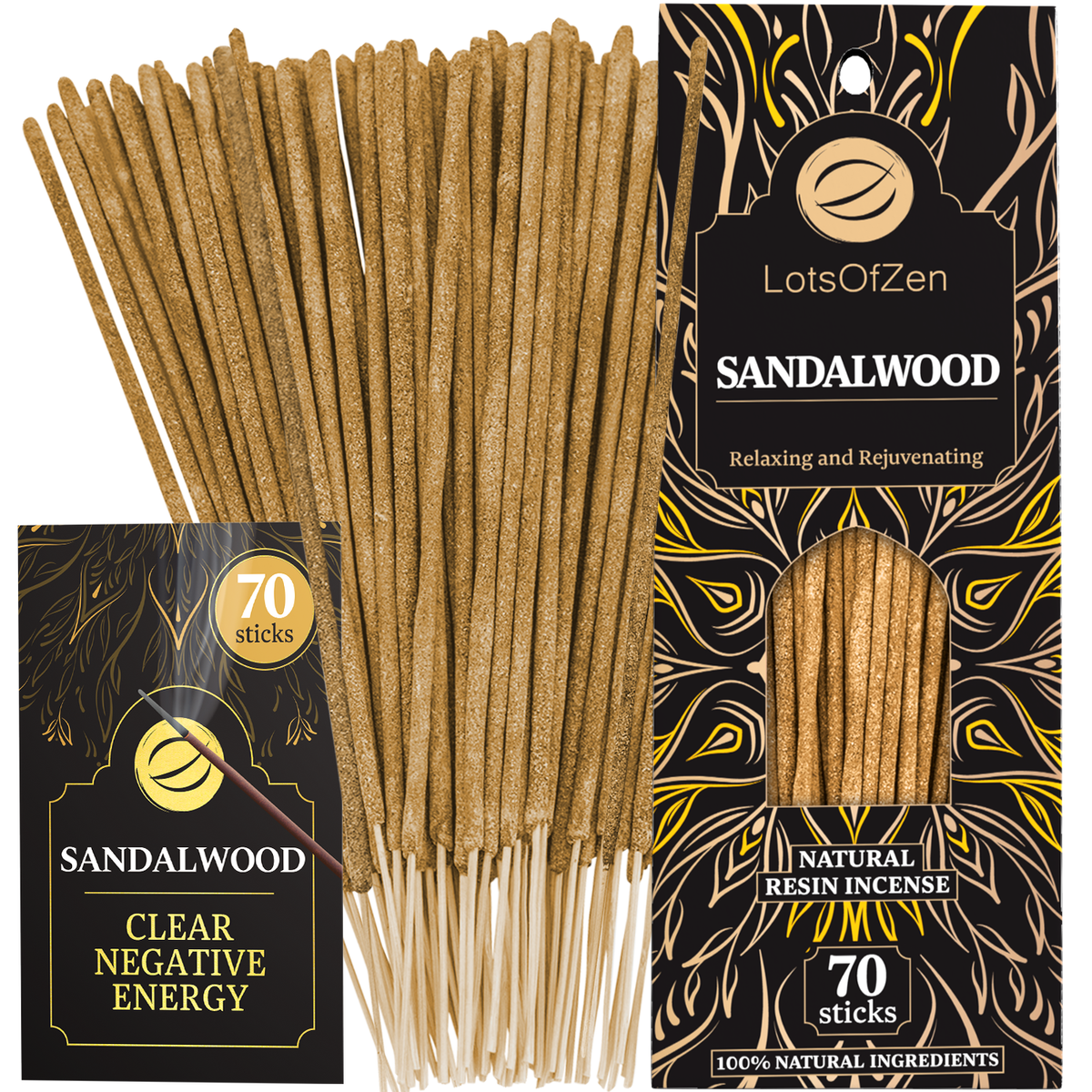
LotsOfZen Sandalwood Incense Sticks
A 70-stick box for the next time you settle in with a book or take a quiet break.
Holder not included. Follow your pack's directions; scent notes above describe sandalwood in general.
Shop Sandalwood IncenseQuick questions
Is sandalwood incense sweet or woody?
Wood is the main note, with a little sweetness. The balance varies by blend. “Creamy” describes a smooth scent, not food or an ingredient.
Do I have to burn a whole stick?
No. Follow the pack's directions to put it out when you are done. Always extinguish it before leaving the room or going to sleep.
Does sandalwood incense clean the air?
No. Burning incense adds particles to the air. Choose it for fragrance if you enjoy it, with ventilation and care.